We're getting interested in listening to the GOES geosync weather satellites, so this page is a collection of links to help get started with that project. We'll report on progress as it happens. https://www.rtl-sdr.com/setting-up-a-goes-weather-satellite-antenna-system/ https://www.rtl-sdr.com/receiving-goes-weather-satellite-hrit-with-an-sdrplay-and-2-4-ghz-wifi-grid-antenna/ Detailed article: https://www.teske.net.br/lucas/2016/10/goes-satellite-hunt-part-1-antenna-system/ Good building options: https://www.rtl-sdr.com/building-a-low-cost-goes-weather-satellite-receiver-with-an-rtl-sdr/ Here's the link to an antenna: https://www.amazon.com/1850-1990-Parabolic-Antenna-Die-Cast-15dBi/dp/B06ZYJ3P82/ref=sr_1_2?ie=UTF8&qid=1536255463&sr=8-2&keywords=parabolic+grid+antenna+1.9 Link to antenna pointing from W2MMD: https://www.satellite-calculations.com/Satellite/Catalog/catalogID.php?41866 Info on GOES 16, the east-coast satellite: https://en.wik...
How We Built the GOES Reception Project Updated 12/1/18 Building our functional GOES 16 receiver was a process of broad web research and cobbling together the experiences of many other successful experimenters. We found lots of individual articles on antenna selection, software, and many other topics, but nothing that really pulled everything together. Hopefully this article will provide a comprehensive overview of our project. If you've found other tips that were useful or have questions or comments about the project, please leave them in the Comments box below and we'll try to reply when possible. Thanks to the many experimenters whose work we copied and implemented in making this project work. Location (QTH) Our station is located at the "clubhouse" of the Gloucester County Amateur Radio Club, located in Mullica Hill New Jersey. The clubhouse provides a dedicated location for radio experimentation and radio operations, complete with a 100 foot tower for VHF...
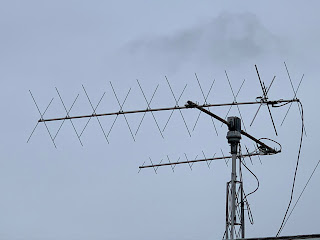
The clubhouse satellite station has had steady incremental upgrades over the past few years but one factor had remained constant – the antenna and rotator system. The antennas were 1980’s style Cushcraft units that were probably average at the time and gave reasonable but not outstanding performance. Since “outstanding” is a goal of the Skunkworks team we were able to procure through a club member donation a pair of M 2 state-of-the-art satellite antennas – the 42-element 436CP42UG crossed yagi for 70 cm and the 22 element 2MCP22 crossed yagi for 2 meters along with the fiberglass boom to connect them. These are the top of the line satellite antennas from M 2 and promised to significantly improve clubhouse satellite operations. Figure 1 - Original Antennas Both antennas are 18 feet long and have considerable gain and would be a significant improvement over the existing antennas but the additional length created potential problems in clearing the clubhouse roof and...


Comments
Post a Comment